Discovered Abuse? Here's How to Protect Your Loved One Now

There are few moments more gut-wrenching than realizing that someone you love, someone you trusted a facility to care for, may be mistreated. Whether it’s neglect, emotional abuse, unexplained injuries, or a sudden change in mood or behavior, the fear that comes with suspecting nursing home abuse is overwhelming.
As a Chicago Nursing Home Abuse Law Firm, we’ve heard the same words from families again and again:
“I didn’t know where to start. I just knew something was wrong.”
You’re dealing with shock, anger, confusion, guilt, and urgency all at once. You want to protect your loved one immediately, but you also know that your next steps matter, for their safety, for their dignity, and for any future legal action.
This guide is designed to walk you through what to do next: how to support your loved one emotionally, how to document signs of abuse, and how a Chicago Nursing Home Abuse Law Firm can help you keep them safe while holding the facility accountable.
How to Deal With Putting a Loved One in a Nursing Home
Placing a loved one in a nursing home is one of the hardest decisions many families will ever make. It often comes with guilt, second-guessing, and fear that you’re not doing enough. The best way to cope with this transition is to stay engaged and present.
Visit regularly. Ask questions. Learn the staff’s names. Your consistent presence offers emotional comfort to your loved one and makes it clear to the facility that you’re paying attention. Review the care plan, understand the facility’s policies, and don’t hesitate to ask how medications, hygiene, meals, and mobility assistance are handled.
Whenever possible, involve your loved one in decisions. Even small choices, what clothes to wear, which activities to attend, when to have visits, can help preserve their dignity and control.
According to the National Institute on Aging, ongoing family involvement improves adjustment to long-term care and reduces loneliness and decline.
And if something doesn’t feel right, if you notice changes that concern you, document what you see and contact a trusted Chicago Nursing Home Abuse Law Firm right away to understand your options and protect your loved one.
What We See Every Day in Chicago Nursing Homes
As a Chicago Nursing Home Abuse Law Firm, we talk to families every week who tell a similar story: everything seemed fine at first, and then the warning signs slowly appeared.
It rarely starts with something obvious. Instead, families notice subtle changes:
- A once talkative parent becomes withdrawn or unusually quiet
- Staff members seem rushed, defensive, or evasive when you ask questions
- Your loved one has bruises, scratches, or weight loss that staff can’t clearly explain
One Chicago family reached out after their father suddenly refused meals and stopped speaking during visits. Staff insisted it was “just aging” and “mood changes,” but the family trusted their instincts. After our investigation, we discovered multiple violations: he wasn’t getting proper feeding assistance, he was being left in one position for hours, and preventable bedsores had formed.
Their message to other families was simple:
“If something feels off, do not ignore it.”
Your instincts and vigilance can be life-changing. A Chicago Nursing Home Abuse Law Firm can help you turn those instincts into decisive action.
How to Deal With Abuse in a Care Home
Discovering or even suspecting abuse in a care home requires immediate, firm, and organized action. The most effective steps include:
1. Document Everything
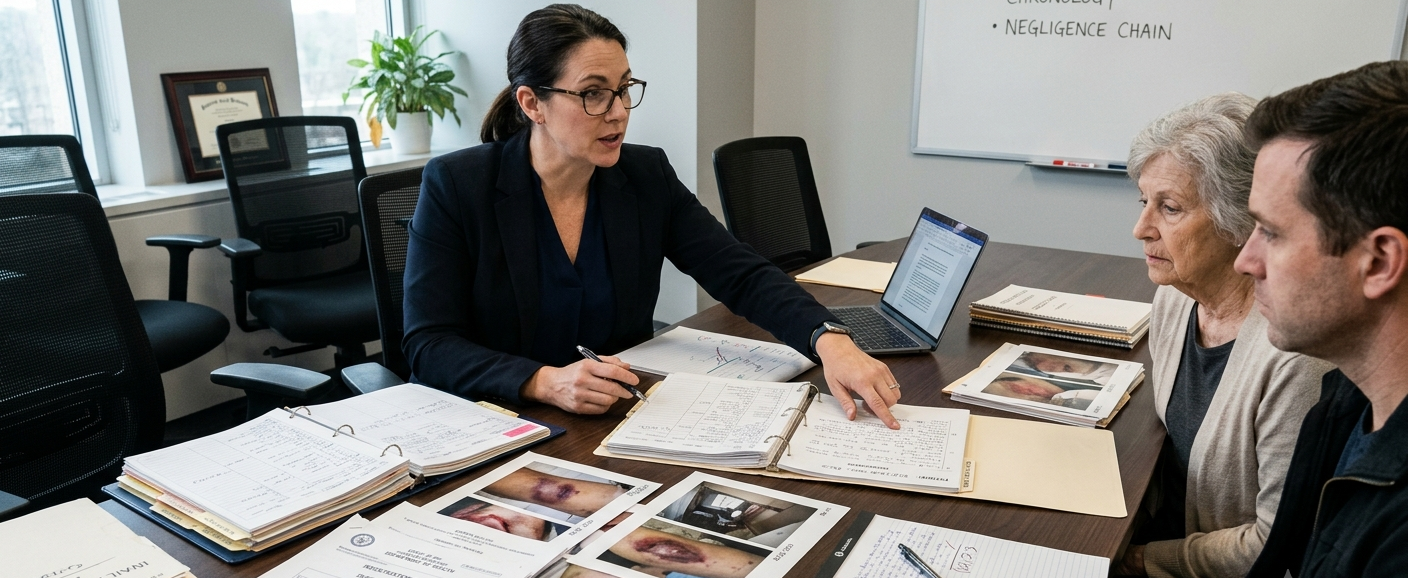
Write down dates, times, names, and specific incidents. Take photos of injuries, bedsores, unsanitary conditions, or anything that concerns you. If possible, keep copies of medical records, care notes, or texts and emails with staff.
2. Speak Carefully With the Facility
You can, and should, raise concerns with management, but be cautious about revealing every detail of what you know or suspect. Facilities sometimes attempt to downplay issues, shift blame, or “clean up” records.
3. Prioritize Safety
If you believe your loved one is in immediate danger, remove them from the facility or call 911. Safety comes first, even before formal complaints.
4. Contact a Chicago Nursing Home Abuse Law Firm
A dedicated Chicago Nursing Home Abuse Law Firm can:
- Help preserve evidence
- Interview witnesses
- Review medical records and care logs
- File formal complaints with state agencies
- Guide you on relocating your loved one safely
5. Report to State Authorities
In Illinois, you should also file a report with the Illinois Department of Public Health, which oversees nursing home safety and conducts investigations into abuse and neglect.
Abuse rarely stops on its own. Without intervention, it often continues, and escalates. Reaching out to a Chicago Nursing Home Abuse Law Firm early can protect not only your loved one, but other residents as well.
What to Say to Someone in a Nursing Home
Talking to a loved one in a nursing home, especially if you worry about neglect or abuse, requires patience, reassurance, and compassion.
You might start with:
- “I’m here for you.”
- “You can tell me anything. I won’t be upset with you.”
- “How are the staff treating you?”
- “Does anything here make you feel unsafe or uncomfortable?”
Avoid forcing specific answers with leading questions like, “Is someone hurting you?” Instead, give them space to share what they feel. Many residents are afraid of retaliation, worried they’ll be seen as “difficult,” or feel embarrassed about what’s happening.
Look for hesitation, long pauses, or signs of distress when certain staff members are mentioned or present. Emotional cues can reveal just as much as words.
If your loved one hints at mistreatment, even if they’re vague or unsure, take it seriously. You can always bring those concerns to a Chicago Nursing Home Abuse Law Firm for a confidential review, even if you don’t yet have “proof.” Part of our role is helping families sort through what is happening and whether it rises to the level of abuse or neglect. Learn more by reading What to Look for in a Lawyer If Your Loved One Was Abused in a Nursing Home.
How to Encourage Someone in a Nursing Home
Encouragement isn’t just “nice to have” in a nursing home, it’s vital to emotional and mental health.
Here are practical ways to support and uplift your loved one:
- Personalize Their Space
Bring photos, their favorite blanket, books, or small decor that makes the room feel familiar. - Visit Regularly and Consistently
Short, frequent visits can mean more than rare long ones. You become part of their routine and support system. - Engage Them in Activities
Play cards, look at old photos, watch a show together, or go outside when possible. Even small activities can lift their mood. - Validate Their Feelings
If they express sadness, frustration, or fear, don’t brush it off. Acknowledge their emotions and let them know they are heard. - Encourage Them to Speak Up
Ask what they like and don’t like about their care. Empower them to share concerns.
Many residents worry they’ll be punished or ignored if they speak out. If you notice fear of a particular caregiver, reluctance to participate in daily routines, or sudden changes in engagement, these may be early warning signs.
In those moments, listen closely, and if your concern grows, contact Chicago Nursing Home Abuse Attorney to discuss what you’re seeing and what to do next.
What Is the Biggest Complaint in Nursing Homes?
The most common complaint in nursing homes is staffing-related: not enough staff, overworked caregivers, and slow response times. When there aren’t enough staff members to meet residents’ needs, the quality of care drops quickly.
Common complaints include:
- Long waits for help getting out of bed or to the bathroom
- Missed or late medications
- Ignored call lights
- Residents left in soiled clothing or bedding
- Rushed or rough handling
- Little to no social or recreational activities
Understaffing doesn’t just cause frustration; it can rise to the level of neglect. A resident who doesn’t get help with eating may lose dangerous amounts of weight. Someone who isn’t repositioned regularly can develop painful, infected bedsores.
Families often struggle to know where the line is between “less-than-ideal care” and legal neglect or abuse. That’s where Chicago Nursing Home Abuse Attorney can help. We look at patterns: Is your loved one repeatedly ignored? Are there preventable injuries? Are basic needs consistently unmet?
If repeated complaints go unresolved, it’s time to escalate.
Early Warning Signs of Abuse You Should Never Ignore
Abuse doesn’t always show up as visible bruises. Often, the signs are subtle and build over time. Here are red flags you should never dismiss:
Physical Signs
- Unexplained bruises, cuts, or fractures
- Sudden or significant weight loss
- Bedsores or pressure ulcers, especially in advanced stages
- Poor hygiene, dirty hair, untrimmed nails, strong body odor
- Repeated infections or frequent trips to the hospital
Emotional or Behavioral Changes
- Withdrawal, sadness, or sudden silence
- Agitation, yelling, or frequent crying
- Flinching when touched or when certain staff come near
- Fear of being left alone with specific caregivers
- Claims of “being in trouble” or “causing problems”
Environmental Signs
- Dirty or unchanged bedding
- Strong odors of urine or feces
- Missing personal items or unexplained financial charges
- Staff who avoid your questions or rush you through visits
- Signs of restraint misuse, bruises on wrists or ankles, residents tied or restricted without explanation
Seeing one sign doesn’t automatically mean abuse is happening, but seeing several signs together should prompt immediate action. Start documenting everything, ask direct but calm questions, and reach out to a Chicago Nursing Home Abuse Law Firm to evaluate the situation.
Your attention and willingness to act can make the difference between ongoing harm and early intervention.
Final Thoughts
When you suspect abuse or neglect, every moment feels heavy. You’re balancing fear, anger, and a deep sense of responsibility. It’s easy to feel like you’re overreacting, or to worry about “making things worse.”
But here’s the truth: Your loved one needs you to speak up.
They rely on you to be their advocate, their protector, and their voice when they can’t safely speak for themselves.
Whether you’re seeing early warning signs or facing clear mistreatment, you don’t have to navigate this alone. A dedicated Chicago Nursing Home Abuse Law Firm can help you:
- Understand what’s happening
- Preserve important evidence
- Move your loved one to safety
- File complaints with state agencies
- Pursue accountability and compensation where appropriate
Your instincts matter. Your advocacy matters. And your loved one deserves safety, dignity, and respect every single day.
If you believe your loved one may be experiencing abuse or neglect, don’t wait, contact Chicago Nursing Home Abuse Attorney today for immediate support and guidance.