How Families Can Respond Legally to Signs of Nursing Home Neglect

Noticing that something feels off about a loved one’s care in a nursing home can be deeply unsettling. Families often describe a quiet sense of worry long before they see anything concrete. It might start with subtle weight loss, a shift in mood, unexplained bruises, poor hygiene, or a sudden health decline that does not match what doctors previously expected. Many families pause at this stage, questioning whether they are overreacting or misinterpreting normal signs of aging. That hesitation is understandable, but it can also delay action at a moment when early intervention matters most.
As a nursing home abuse attorney, we regularly hear families say they wish they had trusted their instincts sooner. Nursing home neglect rarely appears all at once. It develops gradually when basic needs are not met consistently and accountability breaks down. Missed meals, delayed medical care, inadequate supervision, and staff shortages can quietly compound until serious harm occurs. This guide is designed to help families understand how to respond legally when signs of nursing home neglect appear. It explains what steps to take, what evidence matters, and how the law can be used to protect a loved one’s safety, dignity, and quality of life.
How Can Families Respond Legally To Nursing Home Neglect?
Families can respond legally to signs of nursing home neglect by taking a series of deliberate and protective steps. The process begins with documentation, continues with ensuring immediate safety, and often involves reporting the neglect to state authorities. Consulting a nursing home abuse attorney early in this process helps families understand their legal options and avoid missteps that could compromise an investigation.
Key actions include gathering evidence such as photographs, medical records, care plans, and written observations of changes in condition or behavior. Families may also file complaints with regulatory agencies and pursue legal claims if the facility violated state or federal care standards. Legal action may involve investigations, civil lawsuits, or settlement negotiations aimed at stopping neglect, recovering damages, and holding the nursing home accountable. Acting early helps preserve evidence, protect residents from ongoing harm, and create a clear record of what occurred.
How Neglect Cases Commonly Unfold In Chicago
In Chicago and throughout Illinois, neglect cases often begin quietly and progress over time. Families may notice poor hygiene, unanswered call lights, emotional withdrawal, or repeated medical issues long before regulators become involved. We have represented families who raised concerns internally with nursing home administrators, only to see little or no improvement.
At Chicago Nursing Home Abuse Attorney, we understand how local facilities operate and how complaints move through the Illinois Department of Public Health. Knowing when to escalate concerns and how to document them effectively can make a meaningful difference in outcomes. A nursing home abuse attorney familiar with Chicago facilities can help families move from concern to action in a way that protects both the resident and the integrity of the investigation.
How To Respond To Concerns About Abuse And Neglect In A Care Home
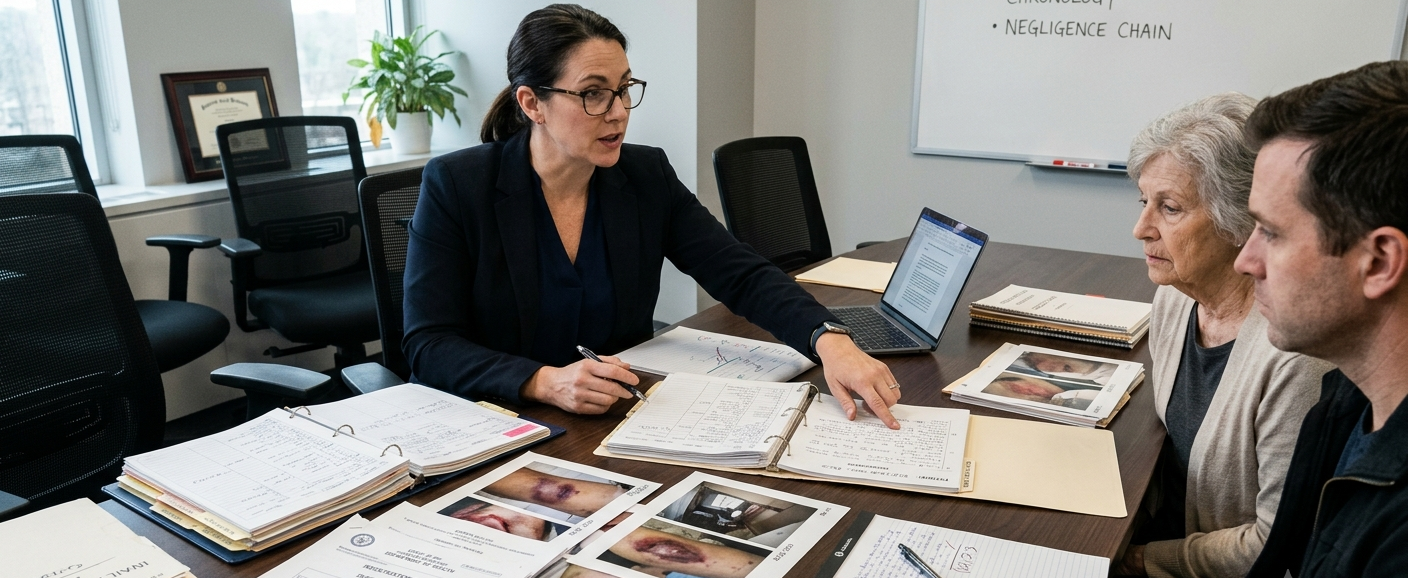
When concerns arise, the most important step is to take them seriously. Begin by observing and documenting what you see. Write down dates, times, and detailed descriptions of incidents or changes in condition. Note unexplained injuries, bed sores, poor hygiene, missed medications, or behavioral changes such as fear, anxiety, or withdrawal. Photographs can be especially powerful, particularly when they show progression over time.
Safety should always come next. If the resident appears to be in immediate danger, request a medical evaluation or emergency care right away. In some cases, a temporary or permanent transfer to another facility may be necessary to prevent further harm. While families often feel pressure to resolve issues quietly, relying solely on internal reporting can be risky.
External reporting to state authorities creates an official record and may trigger inspections or corrective actions. Many families also consult a nursing home abuse attorney at this stage to ensure their actions are strategic and do not unintentionally expose their loved one to retaliation or evidence tampering.
What Is Evidence Of Neglect?
Evidence of neglect includes both physical and non physical indicators. Physical evidence may involve bed sores, dehydration, malnutrition, untreated infections, repeated falls, or injuries without clear explanations. Poor hygiene, soiled bedding, and unclean living conditions also point toward neglect.
Non physical evidence can be just as important. Sudden emotional withdrawal, depression, anxiety, confusion, or fear of certain staff members may indicate emotional neglect or abuse. Documentation often extends beyond what families observe directly. Medical records, care plans, medication logs, and staffing schedules frequently reveal whether proper care was provided consistently.
Witness statements from other residents, visitors, or former employees can further support claims. Patterns matter. A single missed meal may be a mistake, but repeated failures over weeks or months suggest neglect. According to the National Institute on Aging, neglect is one of the most common forms of elder abuse and is often linked to inadequate staffing or poor training.
A nursing home abuse attorney can help families identify which forms of evidence are most relevant and how to preserve them.
What Does A Red Flag Mean In A Nursing Home?
A red flag is a warning sign that something may be wrong with a resident’s care. Common red flags include unexplained bruises, frequent falls, rapid weight loss, bed sores, poor hygiene, or a noticeable decline in mental or physical health. Emotional red flags may include agitation, anxiety, sudden silence, or reluctance to speak around staff members.
Operational red flags are also critical. High staff turnover, unanswered call buttons, restricted visitation, missing personal belongings, or defensive responses to questions can indicate deeper systemic problems. While one red flag alone does not always prove neglect, multiple red flags appearing together should prompt immediate action and further investigation.
How Would You Respond To Your Concerns About Abuse And Neglect?
Responding effectively requires both compassion and strategy. Families should continue documenting concerns while avoiding confrontations that could escalate tensions or lead to evidence being concealed. Calm, factual communication is more effective than emotional accusations, especially early on.
Reporting concerns to state agencies ensures oversight beyond the facility itself. At the same time, consulting a nursing home abuse attorney provides families with guidance on how to proceed legally. Legal counsel can advise on preserving evidence, interacting with investigators, and determining whether a civil claim is appropriate. Many families also request an initial legal evaluation at this stage to understand potential outcomes without pressure or obligation.
Reporting Nursing Home Neglect In Illinois
In Illinois, nursing home neglect can be reported to the Illinois Department of Public Health. The agency investigates complaints, conducts inspections, and enforces compliance with state and federal care standards. Reports can often be made confidentially, and retaliation against residents for reporting neglect is prohibited by law.
While these investigations can result in citations, fines, or corrective action plans, they do not compensate victims or families. Regulatory enforcement focuses on compliance, not recovery. This is why many families turn to a nursing home abuse attorney after reporting neglect. Legal action fills the gap by addressing the personal harm caused and seeking accountability through civil claims.
How A Nursing Home Abuse Attorney Helps Families Navigate The Process
A nursing home abuse attorney plays a critical role once neglect is suspected or confirmed. Legal counsel helps families understand whether the facility violated care standards and what legal options are available. This may include filing a civil lawsuit, negotiating a settlement, or pursuing additional remedies depending on the circumstances.
Attorneys also help coordinate evidence gathering, consult medical experts, and identify systemic failures such as understaffing or inadequate training. For families, this guidance reduces uncertainty and stress during an already difficult time. A nursing home abuse attorney serves as both an advocate and a guide through a complex legal process.
How Legal Action Helps Stop Ongoing Neglect
Legal action does more than seek financial compensation. It creates accountability. Lawsuits often uncover systemic problems within a facility, such as chronic understaffing, ignored care plans, or unsafe policies. When facilities are held accountable, changes are more likely to occur.
At Chicago Nursing Home Abuse Attorney, we have seen how legal pressure can lead to improved staffing levels, better training, and stronger oversight. These changes not only benefit one resident but can protect others who may be suffering quietly. A nursing home abuse attorney helps ensure that neglect is addressed at its root rather than treated as an isolated incident.
Why Timing Matters When Responding To Neglect
Delays can weaken a case and allow harm to continue. Evidence may be lost, records altered, or memories fade over time. Early action helps preserve documentation and protects residents from further neglect. Families often worry about overreacting, but acting early does not mean acting rashly.
Speaking with a nursing home abuse attorney early provides clarity. It allows families to understand what steps are appropriate now versus later and ensures their response is measured, informed, and effective.
Emotional Considerations For Families
Responding to neglect is not just a legal process. It is an emotional one. Families may struggle with guilt, anger, or fear of retaliation. These feelings are normal. What matters is focusing on the resident’s safety and well being.
Legal guidance can ease some of this emotional burden by providing a clear plan of action. A nursing home abuse attorney helps families move forward with confidence instead of second guessing every decision.
Final Thought
Responding to signs of nursing home neglect is emotionally difficult, but silence allows harm to continue. Families who act early by documenting concerns, reporting neglect, and seeking legal guidance can protect their loved ones and others who may be suffering quietly. Neglect is not an inevitable part of aging or institutional care. It is a failure of responsibility, and it deserves a response.
With the right information and support, families can take action confidently and compassionately. A nursing home abuse attorney provides the structure, advocacy, and clarity needed during a challenging time.
If you are worried about a loved one’s care, speak with a trusted nursing home abuse attorney at Chicago Nursing Home Abuse Attorney. We are here to listen, explain your options, and help you take clear, confident legal steps to protect your family member. Contact us today for compassionate, confidential guidance when it matters most.